Cost of Living: Ocean Isle Beach vs Northeast
Ocean Isle Beach, Cost Of Living, Northeast Comparison
What Is the Cost of Living in Ocean Isle Beach, NC Compared to the Northeast?
Thinking about trading snow shovels and subway crowds for sea breezes and a slower pace? Ocean Isle Beach, North Carolina, is on many shortlists for that very reason. But how does the cost of living here really stack up against the Northeast, one of the most expensive regions in the country? This guide breaks down living expenses, housing, and the broader North Carolina lifestyle so you can make a clear, numbers‑based decision.
Comparing Ocean Isle Beach and the Northeast
What your money really buys on the Carolina coast
Ocean Isle Beach at a Glance: Coastal Charm with a Price Tag
Ocean Isle Beach is a small barrier‑island community in Brunswick County, tucked along North Carolina’s southern coast. It offers quiet beaches, fishing piers, golf courses, and a relaxed, family‑oriented vibe. That lifestyle attracts retirees, second‑home buyers, and remote workers—but it also means you’ll pay a premium compared with many inland towns in the state.
According to Salary.com data updated in mid‑2026, a single person in Ocean Isle Beach needs around $2,600 per month (roughly $31,000 a year), and a family of four about $5,700 per month to cover typical living expenses. Overall, the cost of living comes in about 6% higher than the U.S. average, with housing as the main driver. Other estimates place a single adult’s annual costs at roughly $41,000, higher than both the North Carolina and national averages.
How the Northeast Compares: A High‑Cost Benchmark
To understand Ocean Isle Beach in context, it helps to look at the Northeast as a whole—states like New York, New Jersey, Massachusetts, and Connecticut. Federal data consistently show this region as one of the priciest in the country. Regional Price Parity figures place many Northeastern states roughly 8–10% or more above the national average, with major metros such as New York City and Boston even higher when you drill down to city level. The Consumer Price Index for the Northeast also shows persistent inflation in shelter, energy, and medical care costs.
In practical terms, that means everyday living expenses—from rent and mortgages to a night out—tend to cost more in the Northeast than in most of North Carolina, including Ocean Isle Beach. Even though this coastal town isn’t “cheap” by Southern standards, the Northeast comparison still tilts in Ocean Isle’s favor in several key categories.
Housing and Rent: Coastal North Carolina vs. Northeastern Metro Prices
When people ask about the cost of living, what they usually mean first is housing. In Ocean Isle Beach, housing is undeniably expensive for North Carolina—but it’s often more attainable than in many Northeast coastal or metro markets, especially when you factor in property taxes and income taxes.
Home prices in Ocean Isle Beach: Zillow and Trulia put average home values around $530,000–$540,000 in 2026, while Redfin shows a higher median sale price near $895,000 for recent sales—largely reflecting desirable island and waterfront properties. Realtor.com lists median asking prices just above $500,000, with actual sold prices closer to $460,000.
Renting in Ocean Isle Beach: Average rents range roughly from $1,500 for a one‑bedroom to just over $2,100 for a three‑bedroom, with an overall average near $2,000–$2,200 per month. Seasonal demand and proximity to the beach can push certain properties much higher, especially short‑term rentals.
Now compare that to the Northeast. In many metro areas, entry‑level condos and small single‑family homes easily exceed $600,000–$800,000, and rents for modest apartments can top $3,000 a month, particularly in or near Boston and New York City. Even in smaller Northeastern cities, median home prices and rents frequently outpace Ocean Isle Beach, especially once you adjust for square footage and access to the coast.
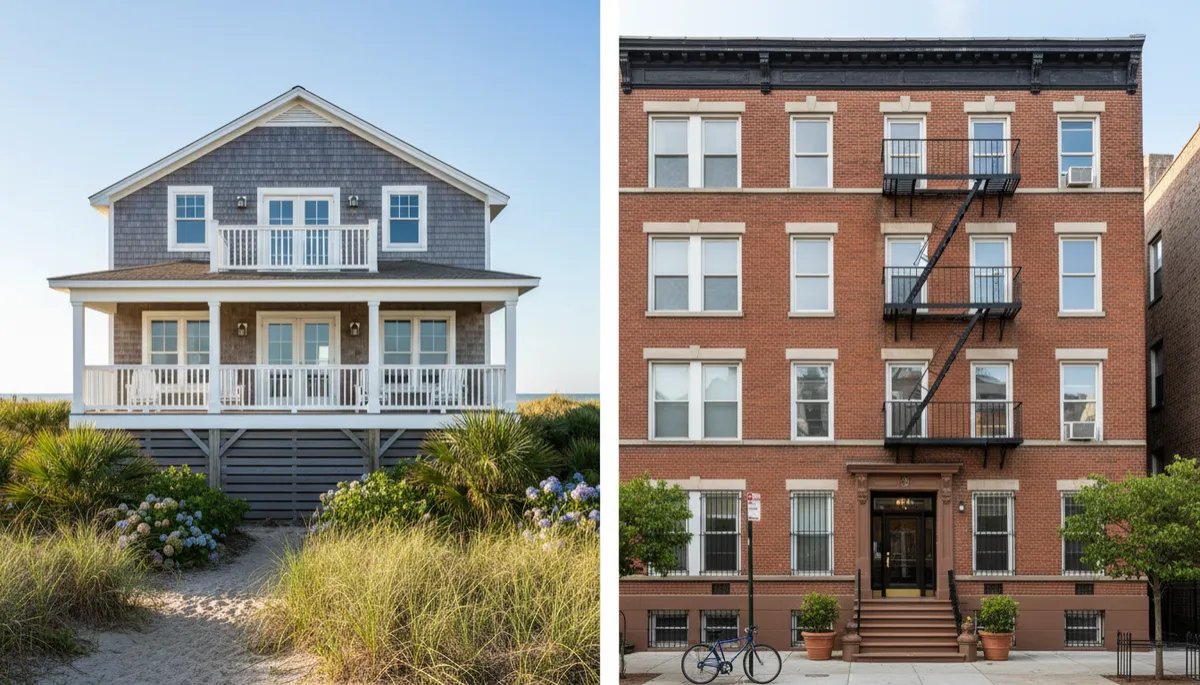
Coastal cottages in Ocean Isle Beach often rival Northeast city rents at lower tax levels.
Beyond the Mortgage: Insurance, Taxes, and Hidden Housing Costs
The phrase “affordable housing” on the coast always needs an asterisk. In Ocean Isle Beach, homeowners face additional costs that many inland or urban Northeastern residents may not feel as intensely: wind, hazard, and flood insurance, plus homeowners association (HOA) fees in many communities. Flood insurance alone can average around $880 per year in coastal North Carolina, and property insurance rates in Brunswick County are rising sharply—double‑digit increases through 2025 and 2026 as insurers respond to storm risk and rebuilding costs.
The trade‑off is that property taxes and income taxes in North Carolina are generally lower than in the Northeast. Brunswick County’s property tax rate is modest compared with many Northeastern counties, and the state’s flat income tax rate of about 3.99% is far below rates in high‑tax states like New York, New Jersey, or Massachusetts. For many households, lower ongoing tax burdens help offset higher insurance and HOA costs, making the overall housing picture more manageable than it first appears.
Everyday Living Expenses: Groceries, Utilities, and Getting Around
Housing may be the star of any cost of living conversation, but day‑to‑day expenses add up just as quickly. In Ocean Isle Beach, most non‑housing categories are close to or even slightly below national averages, which is where the town gains ground compared with the Northeast.
Groceries and dining: Estimates suggest groceries in Ocean Isle Beach land around national levels—roughly within 5–10% of average, depending on the item. You might pay a bit more for certain goods because of coastal logistics, but you’re unlikely to see the steep markups common in dense Northeastern cities, where food inflation and higher commercial rents push prices higher.
Utilities: Expect monthly utility bills (electricity, water, trash) in the $200–$350 range, with summer air‑conditioning being the biggest variable. That’s comparable to or slightly above many parts of the country, but still typically lower than what Northeastern residents pay for heating and electricity during long winters, especially in older housing stock.
Transportation: Ocean Isle Beach is car‑dependent, but distances are short and traffic light. Fuel and insurance costs are moderate, and there’s no need for expensive monthly transit passes or frequent ride‑shares. In the Northeast, you may benefit from subways and commuter rails, but you often pay more in fares, parking, tolls, and higher auto insurance premiums—especially in urban and suburban corridors.
Healthcare and Quality of Life: The North Carolina Lifestyle Advantage
Healthcare is another important piece of the cost of living puzzle, particularly for retirees and families. Some cost calculators suggest healthcare expenses in Ocean Isle Beach sit below the national average, while the Northeast registers higher costs along with rising medical inflation. Exact numbers vary by plan and provider, but the general pattern is that routine care and insurance premiums often feel lighter in coastal North Carolina than in major Northeastern metros.
Beyond pure dollars, many people look to Ocean Isle Beach for a specific North Carolina lifestyle: slower pace, outdoor living, and year‑round access to the beach. Mild winters mean less money spent on heavy clothing, snow removal, and winter commuting hassles. Free or low‑cost recreation—walking the shore, kayaking, fishing, or simply enjoying local parks—can replace pricier entertainment options that are more common in big cities. When you factor those lifestyle perks into your personal cost of living equation, the value proposition becomes clearer.
Is Ocean Isle Beach “Affordable Housing” Compared with the Northeast?
“Affordable” is always relative. If you are relocating from a low‑cost rural area, Ocean Isle Beach will likely feel expensive. But if your Northeast comparison point is a suburb of Boston, northern New Jersey, or downstate New York, the numbers can look surprisingly favorable—even with coastal premiums, insurance, and HOA fees factored in.
A mid‑range home near the beach in Ocean Isle may cost what a smaller, older house costs in many Northeastern suburbs—often with lower annual taxes.
Comparable rentals can be hundreds of dollars less per month than city apartments in the Northeast, especially once you adjust for space and outdoor access.
For many households, that makes Ocean Isle Beach a form of affordable coastal housing when measured against the Northeast’s steep prices—particularly for retirees living on fixed incomes or remote workers whose salaries were set in higher‑cost markets.
Putting It All Together: Which Location Fits Your Budget and Priorities?
So, what is the cost of living in Ocean Isle Beach, NC compared to the Northeast? In simple terms:
Ocean Isle Beach is roughly 6% above the national average overall, driven largely by housing and insurance, but many everyday living expenses sit close to or below national norms.
The Northeast, by contrast, often runs 8–10% or more above average—and significantly higher in major metro areas—primarily because of elevated housing, taxes, and core inflation in shelter and services.
If your goal is to reduce monthly living expenses while upgrading your quality of life, Ocean Isle Beach can be an appealing middle ground: not a bargain‑basement market, but a place where your housing dollars often stretch further than in the Northeast, and where the North Carolina lifestyle—milder weather, outdoor recreation, and a slower rhythm—adds intangible value that doesn’t show up on a spreadsheet.
Before making a move, map out your own budget: compare current mortgage or rent, taxes, healthcare, and transportation with realistic Ocean Isle Beach estimates. For many Northeastern residents, that exercise reveals a clear pattern—while you may pay a premium to live by the ocean, the overall cost of living can still come in lower than staying put in a high‑cost Northeastern market, especially over the long term.

